
1. What is artificial intelligence
The term Artificial intelligence (AI) was coined in 1956, to describe “the science and engineering of making intelligent machines”. That is, machines and programs that can recognise patterns, analyse data, solve problems, complete tasks, and learn. Over the last decade, AI technologies have been incorporated into a wide range of consumer products and services, and enterprise systems. The rapid development of Generative Artificial Intelligence (GenAI) — technology capable of generating text, images, video, audio and code — has the potential to transform how we interact with technology at home and work.
Types of AI
Domains of AI
Artificial intelligence has a number of underlying domains or fields that are helpful to understand. You may have heard some of these terms before.
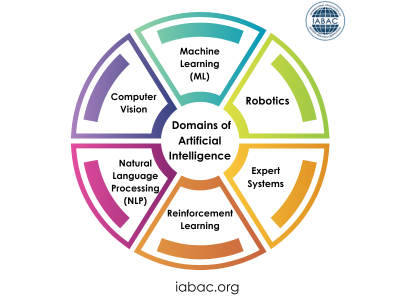
Machine learning
Machine learning refers to algorithms that use existing data to improve over time without being explicitly programmed to do so. There are many examples of this, including:
- evolutionary algorithms
- deep learning
- neural networks
- Markov chains.
Deep learning is another type of machine learning. Deep learning uses neural networks, a system of interconnected nodes modelled on the human brain. For example, let’s say we wanted a network that can recognise cats. We would give it two sets of images containing “cats” and “not cats”. Then neurons will do mathematical operations to the image and produce a first guess. This guess is usually incorrect, however the network then adjusts these calculations until it responds to features of the training data (such as tails or whiskers) and starts being correct more often. Once training is complete, the network can be given new images. It will then use those features it learned during training to calculate the likelihood that any given image is a cat.
Robotics
Robotics is interested in the design, construction and use of robots. Many robots are used to assist humans and are heavily used in manufacturing, but they are also used in transport, medicine, agriculture, and the military. Robots can have varying levels of autonomy. Fully autonomous robots often make people uncomfortable and raise a host of ethical and social concerns.

Natural language processing
National language processing (NLP) allows computers to process language in a similar way to humans and “enables computers and digital devices to recognize, understand and generate text and speech by combining computational linguistics—the rule-based modeling of human language—together with statistical modeling, machine learning and deep learning” (Source: What is NPL?).
Computer vision
The field of computer vision seeks to emulate our human ability to “see”, recognise and respond to visual input. One example of this technology in use is self-driving cars (Source: What is computer vision?).
Real world applications
You might be using AI technologies already embedded in consumer-facing products and platforms. Your mobile phone may have a virtual assistant (Siri, Gemini, Google Assistant, Alexa) that relies on natural language processing to convert your words into prompts the machine can understand and respond to. Your photo app may use machine learning to improve image recognition, allowing you to search your photo Library for pictures of dogs. It can be used for actions such as shopping, translating text and searching. Your translation app may use a neural network to figure out what word should come next.
Rise of the Chatbots: ChatGPT, Claude, Google Gemini, Microsoft Copilot
Since Open AI launched ChatGPT in 2022, chatbots have quickly emerged as one of the most visible and widely used AI technologies. The GPT in ChatGPT stands for “generative pre-trained transformer”, and is a Large Language Model (LLM). Many chatbots rely on LLMs, models trained on vast amounts of data using deep learning and neural networks. These chatbots are widely capable and can be applied to a range of tasks. They can:
- engage in conversation
- generate text, images, video, audio and code
- translate text
- summarise content
- identify patterns
- answer questions.
Many of the biggest technology companies have developed LLMs, including Alibaba, Google, Meta, Microsoft and Nvidia.
The Google Trends graph shows a sample of search requests made to Google on the term “ChatGPT”, and demonstrates the search term is almost at 100 (peek popularity for the search term).
The Gartner hype cycle
Artificial intelligence has gone through a number of cycles of investment and hype throughout its development, and we are currently in a period of AI boom.
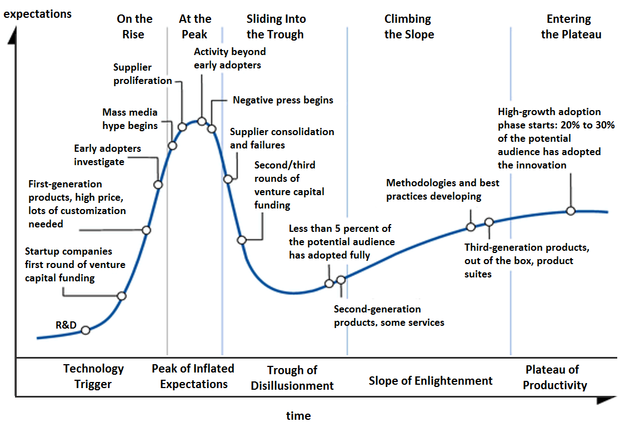
Previous periods of inflated expectations have been followed by periods of disillusionment as the early promise failed to materialize. While it is not possible to predict the future course of the development of any technology, there are signs we may be entering the “trough of disillusionment” in Gartner’s hype cycle, and assuming a more cautious appreciation of AI and generative AI.
 Read Generative AI hype is ending – and now the technology might actually become useful (The Conversation, October 2024)
Hardware and chips
AI technology relies on state-of-the-art chips, that are faster and more efficient. Graphics Processing Units (GPU), in particular, have become integral to the rollout of AI technologies for their “number-crunching prowess” (What is a GPU? An expert explains the chips powering the AI boom, and why they’re worth trillions).
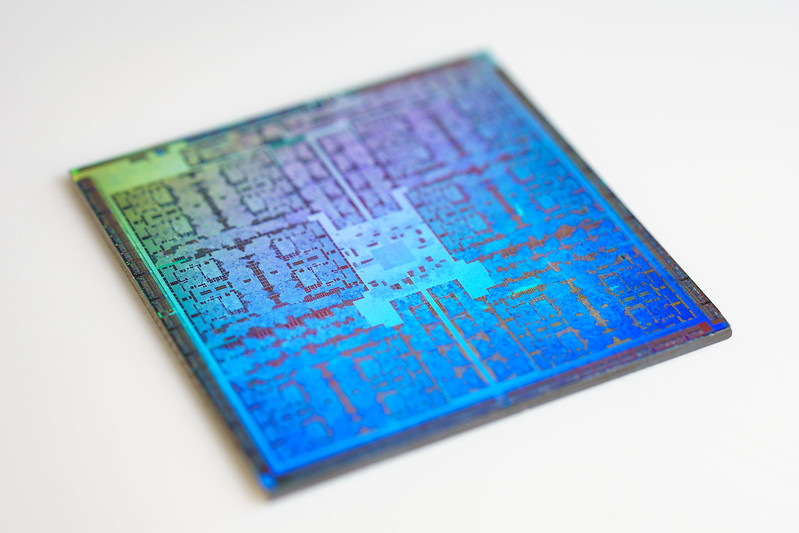
Chip makers are now amongst the most valuable publicly traded companies. For instance, the NVIDIA Corporation’s market cap has increased significantly alongside the expansion of GenAI tools, rising 353% from approximately $735 billion (Dec 2021) to 3.3 trillion (Dec 2024) over the 3-year period. Personal devices like mobile phones are increasingly including not only standard AI technologies but also generative AI. Many flagship phones are building products with more advanced hardware, making “on-device” functionality a reality for the first time.